
Mobility Aids: Choosing What Actually Works
A straightforward breakdown of walkers, canes, grab bars, and mobility scooters. Includes what to consider when choosing equipment and how to help your parent adjust.

Why Mobility Matters
Your parent's independence hinges on their ability to move safely around the home and community. When mobility becomes difficult, it's not just about physical limitation — it affects confidence, social life, and mental health. The right mobility aid can be the difference between staying active and withdrawing from daily life.
Here's the thing: there's no one-size-fits-all solution. What works brilliantly for your neighbour's mum might not suit your dad at all. We'll walk you through the main options, what they're actually good for, and how to help your parent get comfortable using them.

Understanding Your Options
Each mobility aid serves a different purpose and level of support
Walking Canes
Single-point canes offer minimal support — mainly balance assistance on one side. They're lightweight, portable, and don't require much adjustment. Best for people with mild balance issues or minor weakness on one side.
- Easy to carry and store
- Minimal learning curve
- Affordable option
- Good for outdoor walking
Walking Frames (Walkers)
Frames provide support on both sides and take a significant amount of weight off the legs. They're more stable than canes but require both hands. Standard frames work well indoors; wheeled versions are better for outdoor use and longer distances.
- More stability than canes
- Can support more weight
- Wheeled versions available
- Some have built-in seats
Grab Bars & Rails
Fixed to walls in bathrooms, kitchens, and hallways, grab bars provide stability at critical points where falls are most likely. They don't require your parent to carry anything and become part of the home environment.
- Permanent fall prevention
- Nothing to carry or adjust
- Works with all mobility levels
- Installation required
Mobility Scooters
For those who can't walk long distances, scooters provide independent transport. Three-wheeled versions are more manoeuvrable indoors; four-wheeled models are more stable. They restore freedom for community access and social activities.
- Covers longer distances
- Less physical exertion
- Maintains independence
- Requires storage space
How to Choose the Right Aid
Don't rush this decision. The wrong equipment can actually make things worse — your parent might abandon it altogether if it doesn't fit their needs or lifestyle.
Ask These Questions First
- Where will they use it most? Indoor only changes the decision. If they need to access shops, parks, or visit friends, that's different again.
- How much weight do their legs bear? A cane helps with balance. A frame takes significant weight. A scooter removes it entirely.
- Do they have use of both hands? Arthritis, stroke effects, or tremors might make a two-handed frame impractical. A cane or single-handed option works better.
- What's their cognitive state? Complex equipment needs understanding. If memory's an issue, something simple and consistent works best.
- Will they actually use it? This matters more than anything. Some people reject aids due to pride or vanity. Start with something that feels least "disabled" to them.
Talk to their GP or physiotherapist before buying. Many councils offer free equipment assessment, and the NHS can provide or loan certain items at no cost.

Getting Your Parent to Actually Use It
Acceptance is the biggest hurdle. Many people see mobility aids as admitting defeat, as stepping into old age. You might hear, "I don't need that yet" or "I'll look silly." These feelings are valid, not stubborn.
What Actually Works
Frame it as freedom, not limitation. Instead of "You need this," try "This lets you keep doing the things you enjoy." A frame that lets your dad visit his mates weekly is enabling independence.
Start with something minimal. A single cane feels less dramatic than a walker. Once they're comfortable, they might accept more support if needed.
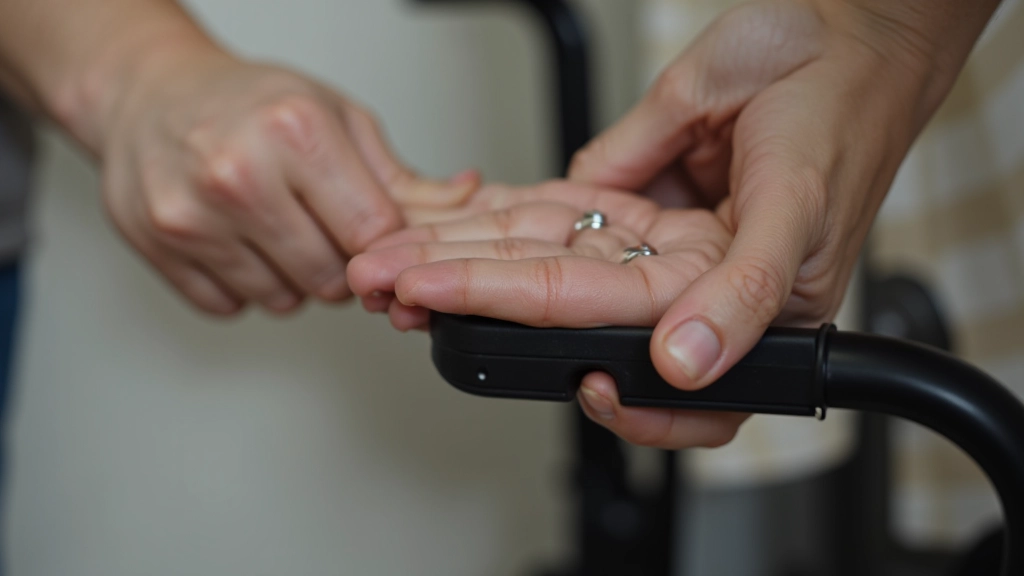
Get proper instruction. Most people don't use aids correctly. A physiotherapist spending 15 minutes showing the right technique — height adjustment, weight distribution, walking pattern — makes a huge difference. It also builds confidence.
Use it together initially. Walk with them. Use the aid yourself to show it's normal. Let them see you taking it seriously, not pitying them.
Practical Tips for Making It Work
Get the Height Right
A cane should reach the wrist crease when arms hang naturally. A walker should allow elbows to bend at roughly 15-20 degrees. Wrong height causes shoulder pain, bad posture, and reduced effectiveness. Most equipment is adjustable — take time to get it perfect.
Maintain Safety at Home
Install grab bars where they'll actually use them — by the toilet, in the shower, at stairs. Remove trip hazards like loose rugs. Make sure pathways are clear. Good lighting in hallways prevents falls more than any aid does.
Check Equipment Regularly
Rubber feet wear down and become slippery. Hinges loosen. Wheels need air. Set a reminder to check monthly. A well-maintained aid is safer and lasts longer.
Plan Ahead for Social Situations
If they're self-conscious about using an aid in public, visit friends at quieter times, or go to places where other people use mobility aids (parks, community centres). Normalise it gradually.
Getting Support and Equipment
You don't always have to buy equipment outright. The UK has several options:
NHS Equipment Loans
Your GP can refer to the local wheelchair service or community equipment loan. Many councils loan frames, canes, and grab bars free of charge. Waiting lists vary, so ask early.
Occupational Therapy Assessment
OTs can assess your parent's home and recommend specific equipment. Some assessments are NHS-funded; private options cost £100-300 but give tailored advice.
Charity Support
Organisations like Age UK and the British Red Cross offer equipment grants and sometimes free equipment for low-income older adults.
Local Retailers
Shops like Boots, pharmacies, and mobility specialists let your parent try equipment before buying. Staff can advise on fit and features.
The Bottom Line
Choosing a mobility aid isn't about accepting decline — it's about staying active and independent. The right equipment can add years to your parent's active life, keep them in their own home longer, and maintain the confidence and social connections that matter most.
Start with a conversation. Listen to their concerns. Get professional advice. Try things out. You'll find what actually works, not what's theoretically perfect. And remember — using an aid shows wisdom and self-awareness, not weakness. Your parent's maintaining their independence by accepting the right support.
Important Information
This article provides general information about mobility aids for educational purposes. It's not a substitute for professional medical advice, assessment, or equipment fitting. Every person's needs are different. Before purchasing or using mobility equipment, consult with your parent's GP, a physiotherapist, or an occupational therapist who can assess their specific situation. They may recommend equipment or adjustments we haven't covered here.